
Complexity is the Thief of Execution.
Most people don’t fail because they can’t do hard things.
They fail because they make simple things too hard to start.
Lately, I’ve become very aware of how often I — and the people around me — tend to complicate things.
When I start something new, my instinct is usually to find the most complex way possible to do it. And honestly, that often sets me up for failure before I even begin.
What I’ve come to learn is this:
Complexity is the thief of execution.
When things feel too complicated, we get overwhelmed. And when we get overwhelmed, we avoid doing them altogether.
The truth is, most people are not struggling because they lack intelligence, motivation, or desire. They’re struggling because the process they created for themselves is too heavy to carry consistently.
And consistency matters far more than intensity.
The Health Example That Changed My Perspective
For years, I believed that being healthy meant going to the gym for 1–2 hours every single day.
That meant waking up early, getting dressed, packing a gym bag, grabbing my keys, driving there, checking in, changing clothes, working out, showering, changing again, packing up, and finally getting on with my day.
When you really think about it, the actual workout wasn’t even the hard part. It was the production surrounding it.
The preparation.
The time commitment.
The mental resistance.
At some point, I asked myself a much better question:
“How can I simplify this enough that it actually becomes sustainable?”
The answer was simple.
Put on your sneakers and walk.
That’s it.
No prep.
No fanfare.
No elaborate routine.
Just walk.
I also learned something important about myself: if my workout consistently took longer than 45–50 minutes, I probably wouldn’t stick with it.
So a simple 40-minute routine done 5 times a week became infinitely more valuable than a 2-hour routine I would only do once a month.
That shift changed everything.
Small Things Compound
Over time, my 30-minute walks became 40-minute walks.
The walks became jogs.
The jogs became runs.
Then I added some weights at home.
Nothing dramatic happened overnight. There was no giant transformation moment.
Just simple steps repeated consistently.
That’s usually how real change happens.
Not through intensity.
Through repetition.
Why Simplicity Matters Even More During Loss
This becomes even more important when you’re dealing with grief, stress, anxiety, or emotional exhaustion.
After experiencing loss, your attention span shrinks.
Your emotional bandwidth drops.
You become overwhelmed more easily and distracted more quickly.
So if life already feels heavy, creating complicated systems for yourself usually backfires.
This is why simplifying things becomes critical during difficult seasons.
Break life down into smaller steps.
Smaller decisions.
Smaller wins.
Then let consistency do the heavy lifting.
You do not need to rebuild your entire life overnight.
You just need a few sustainable habits that help stabilize your nervous system and create momentum again.
A Simple Reset Practice
Here’s a simple exercise you can do anytime you feel overwhelmed, anxious, or mentally scattered.
1. Set a timer for 1–2 minutes.
Give yourself permission to pause for a moment. Not to solve anything. Not to fix anything. Just to stop moving long enough to reconnect with yourself.
2. Put one hand on your chest and one hand on your belly.
This helps bring your attention back into your body instead of staying trapped in your thoughts. Feel the warmth of your hands and simply notice where you’re holding tension.
3. Slowly breathe in through your nose and feel your body rise beneath your hands.
Don’t force the breath. Just let it come in naturally. Notice your chest expand. Notice your belly move. Let the breath remind you that your body knows how to slow down, even when your mind feels busy.
4. Slowly exhale and let your shoulders soften.
With each exhale, try to release a little tension from your jaw, shoulders, neck, or chest. You don’t need to clear your mind. You just need to give your nervous system a small moment of safety and stillness.
That’s it.
Simple.
Small.
But powerful when practiced consistently.
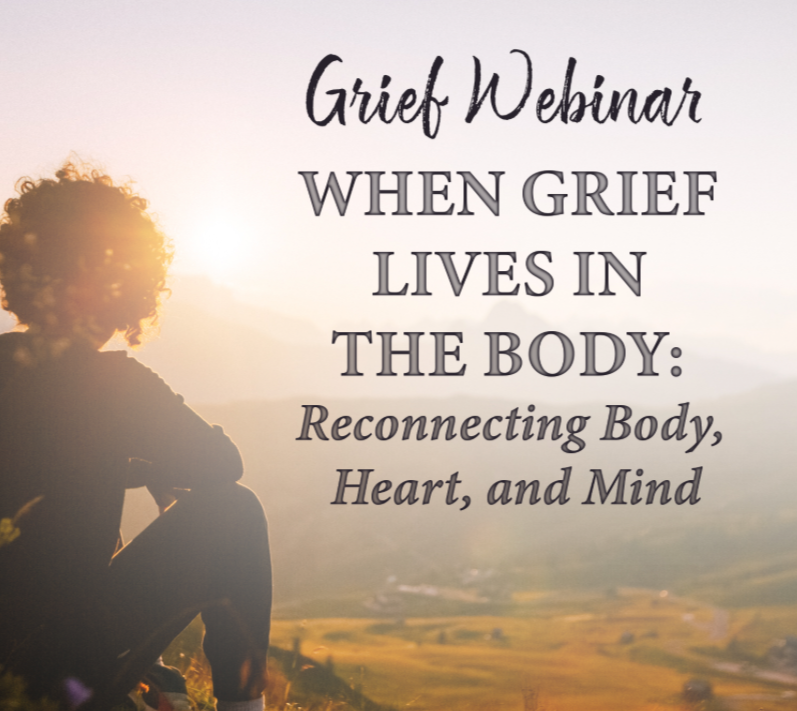
If this idea resonates with you, I also recorded a deeper conversation about how grief and emotional overwhelm affect the body and why simple, sustainable practices matter more than dramatic changes.
Final Thought
We often think progress comes from doing more.
But sometimes progress comes from removing friction.
Making things easier.
More sustainable.
More repeatable.
Because simple things get done.
And the things that get done consistently are usually the things that change our lives.
Keep it simple.